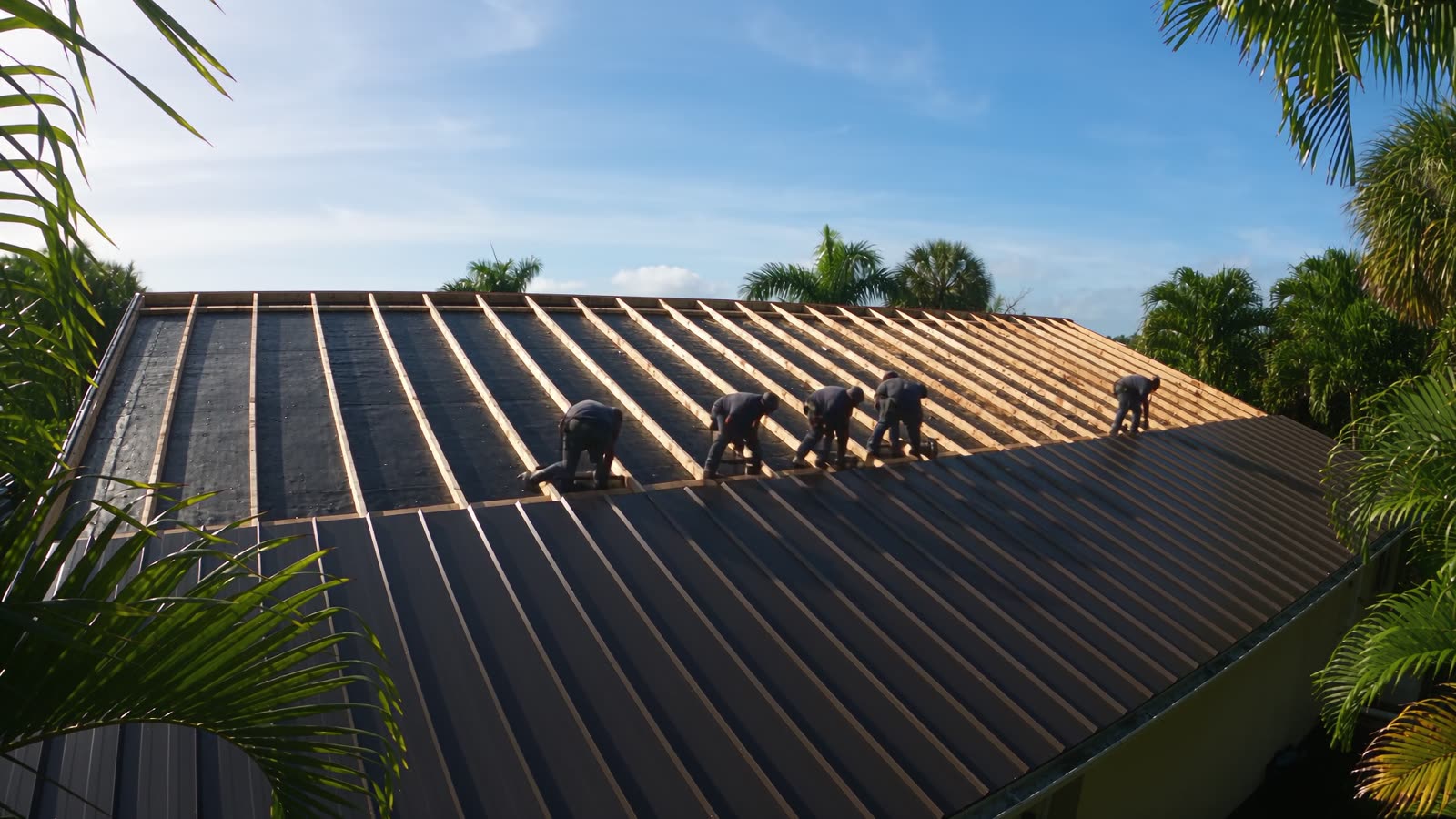
Hurricane code, in plain terms
Why a roof in Hollywood is built differently from the same roof in Wellington, and what that means for what you are quoted.
The short answer
Miami-Dade and Broward are the only two Florida counties inside the High Velocity Hurricane Zone, defined in Florida Building Code sections 1616 to 1626. Roofs there are designed for 175 mph three-second gust wind speeds (Risk Category II) and every product must carry a Miami-Dade Notice of Acceptance with TAS 201, 202 and 203 impact testing. Palm Beach sits outside the HVHZ at 150 to 170 mph using Florida Product Approval. That difference, not contractor markup, is why the same house costs more to re-roof in Broward than in Palm Beach.
The zone, and what it demands
The HVHZ exists because of Hurricane Andrew. In 1992 Andrew demonstrated that the 145 mph design speeds then in force were badly inadequate, and that a single failed opening pressurises a house and lifts the roof off. The response was the strictest wind-borne debris code in the United States, applied to two counties.
| County | Zone | Design wind speed | Product approval | In-progress inspection |
|---|---|---|---|---|
| Miami-Dade | HVHZ | 175 mph | Miami-Dade NOA | Mandatory |
| Broward | HVHZ | 170 to 175 mph | Miami-Dade NOA | Mandatory |
| Palm Beach | Outside HVHZ | 150 to 170 mph | Florida Product Approval | Per jurisdiction |
Inside the HVHZ the requirements stack up in four places, and all four cost money:
- Approved products only. The covering, underlayment, fasteners and accessories must all appear on a Miami-Dade Notice of Acceptance, and be installed exactly as the NOA was tested.
- Impact testing. TAS 201, 202 and 203 large- and small-missile tests, which is a higher bar than the rest of the state.
- Heavier fastening. Denser nailing and clip schedules than mainland assemblies.
- A mandatory in-progress inspection. The county looks at the deck and dry-in before anything covers it, which means the job stops and waits.
The 25% rule, and what SB-4D changed
Florida Building Code Existing Building §706.1.1 states that no more than 25 percent of a roof area or roof section may be repaired, replaced or recovered in any 12-month period unless the entire roofing system is brought up to current code. For years this meant a moderately damaged roof triggered a full replacement.
Senate Bill 4-D, passed in May 2022 and codified at Florida Statute 553.844, narrowed it considerably. If the existing roof was built to the 2007 Florida Building Code, effective 1 March 2009, or any later edition, only the repaired portion must be brought to current code. Separately, Florida Building Commission declaratory statement DS 2021-007 confirmed that tie-off work connecting repaired to unrepaired areas does not count toward the threshold.
In practice: if your roof was permitted after March 2009, partial repair is usually still on the table. If it predates that, budget for the possibility that a large repair becomes a full replacement. Many contractors have not updated what they tell homeowners about this.
What this means when you compare quotes
A quote that comes in far below the others inside Miami-Dade or Broward is usually cheap for a reason. The three most common are an underlayment that is not on the NOA, a fastening pattern lighter than the schedule requires, and no permit at all. The first two you cannot see from the ground once the roof is on. The third surfaces at your next sale or insurance inspection. Ask for the NOA numbers, and ask who is pulling the permit.
References: Florida Building Code §§1616–1626 (High Velocity Hurricane Zone); Florida Building Code, Existing Building §706.1.1; Florida Statute 553.844 (SB 4-D, 2022); Florida Building Commission DS 2021-007; Miami-Dade County Product Control Notice of Acceptance program; TAS 201/202/203.
Common questions.
What is the High Velocity Hurricane Zone?+
The HVHZ is a special wind region defined in Florida Building Code sections 1616 to 1626 covering exactly two counties, Miami-Dade and Broward. It was created after Hurricane Andrew in 1992 showed that the 145 mph design speeds then in force were not enough. Buildings inside it are designed for 175 mph three-second gust wind speeds for Risk Category II, and every roofing product must carry a Miami-Dade Notice of Acceptance.
What is a Miami-Dade NOA?+
A Notice of Acceptance is a product approval issued by Miami-Dade County certifying that a specific roofing assembly has passed the TAS 201, 202 and 203 impact and pressure tests. Inside the HVHZ, every component of the roof, the covering, the underlayment, the fasteners and the accessories, must appear on an NOA, and it must be installed exactly as the NOA was tested.
Is Palm Beach County in the HVHZ?+
No. Palm Beach sits outside the HVHZ and uses Florida Product Approval rather than Miami-Dade NOA, with design wind speeds roughly 150 to 170 mph depending on how close to the coast you are. This is the main reason an identical house costs less to re-roof in West Palm Beach than in Hollywood.
What is the 25% rule?+
Florida Building Code Existing Building section 706.1.1 says no more than 25 percent of a roof area or section may be repaired, replaced or recovered in any 12-month period unless the entire system is brought to current code. Senate Bill 4-D in May 2022, codified at Florida Statute 553.844, narrowed it so that roofs built to the 2007 code (effective 1 March 2009) or later only need the repaired portion brought to code.
Does tie-off work count toward the 25 percent?+
No. Florida Building Commission declaratory statement DS 2021-007 confirmed that related work connecting a repaired area to an unrepaired area does not count toward the 25 percent threshold. Only the actual damaged area requiring repair is counted.
Free inspection, written quote, no pressure
We measure the roof, photograph what we find, and give you an itemised number with the deck rate and permit fee stated up front.